
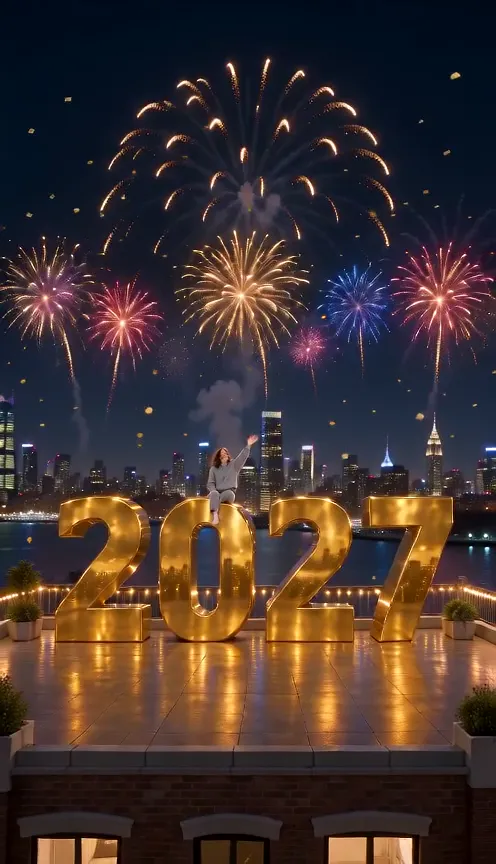
AI New Year Video
Upload one photo and get a 5-second vertical New Year 2027 video: it opens close on you cheering, then the camera pulls back to show you sitting on top of giant gold 2027 numbers on a rooftop, with fireworks over the city. There is no prompt to write; each video is 480p with sound and costs 100 credits (about $1.00), ready in about 3 minutes, with no subscription and credits that never expire.
- You upload: One photo of you, a couple or a pet
- You get: A 5-second vertical 480p video with sound
- Price: 100 credits (about $1.00)
- Prompt: None
- Subscription: None
Faces in good light, looking at the camera.
If a run fails, your credits come back automatically. The result is saved in Creations.
Your photo in, a Hello 2027 video out
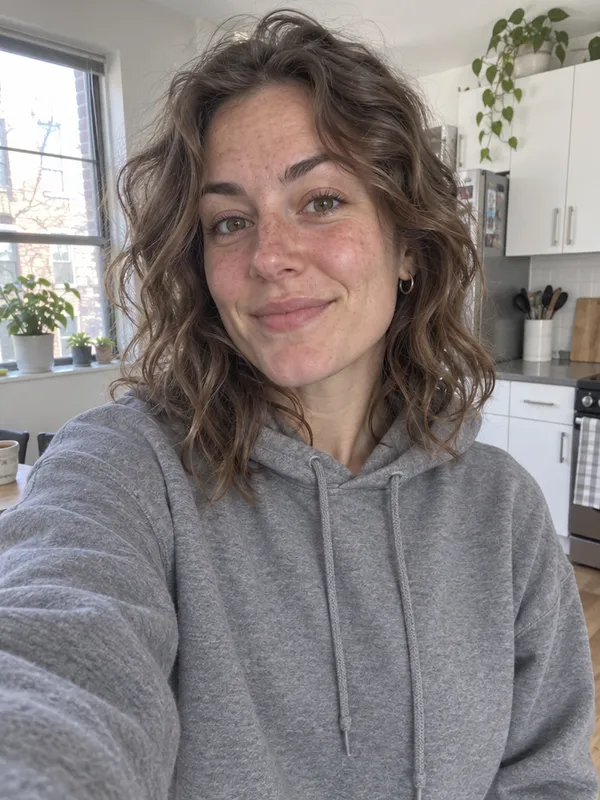
Each example shows the photo that went in and the clip that came out.
Photo Selfie in the kitchen
The input photos were made with AI; the people, pets and rooms in them aren’t real.
How to make a New Year video from a photo in 3 steps
- 1
Pick a clear photo
A selfie, a photo of the two of you, or your dog or cat, with faces lit and facing the camera. Head and shoulders or half body works best.
- 2
Upload it and press Generate
Sign in, add the photo (JPG, PNG or WebP, up to 10 MB) and tick the box to confirm you may use it. The button shows the price, 100 credits, before anything is charged.
- 3
Download and post it
In about 3 minutes the video opens in Creations: 5 seconds, vertical, 480p, with sound. Post it as a Story, a Reel, a TikTok or a WhatsApp status, or run it again for another take.
Which photo works best
- Faces in good light, looking at the camera.
- Your own photo, or one of people who agreed to it; one or two people work well.
- For pets: the face visible, eyes open, not mid-movement.
- A sharp phone photo is enough; the background is replaced.
- Sunglasses, hands or hats covering the face: the AI has to guess what’s hidden.
- Group shots where faces are tiny: on the giant numbers each face gets smaller.
- Blurry or very dark photos.
- Photos of other people who haven’t agreed, and photos of children you aren’t the parent or guardian of.
Posting it on TikTok, Reels, WhatsApp or LINE
- The video is vertical (9:16), so it fills a Story, a Reel, a TikTok or a WhatsApp status without black bars.
- It comes with its own sound: fireworks and a cheering crowd. To use a song instead, add one from the app’s music library when you post.
- Post it around midnight on New Year’s Eve or on New Year’s Day; the clip is short enough to send to family chats too.
- When you post it publicly, say it was made with AI.
Other ways to make a Hello 2027 video
Checked on November 9, 2026. Prices and limits change often; check before you pay.
| Option | Cost | What you do | Good to know |
|---|---|---|---|
| This template | 100 credits (about $1.00); packs from $9.99 | Upload one photo | One tested look with the year’s digits taken from a ready-made image, vertical, with sound, no prompt, no subscription. |
| Other AI video template sites | Roughly US$3–5 per clip in listings we checked | Find the template, upload a photo | Similar giant-number effects; many sell credits or plans and show the price only after sign-up. |
| A chat assistant | A daily allowance for pictures; video usually needs a monthly plan | Write and adjust a prompt yourself | Good for a still New Year picture; video is a separate step with its own limits, and the year’s digits can come out wrong. |
| A video editor with countdown templates | Often a subscription | Edit the clip yourself | Stock fireworks and text over your photo, not you placed in the scene. |
The Hello 2027 trend, without writing a prompt
The New Year trend is simple: a photo of you, a giant 2027, fireworks. Doing it yourself means writing a long prompt for an AI tool, asking it to keep your face, and checking every take for wrong digits, because AI video often garbles numbers it has to invent. This template keeps one tested scene, camera move and sound on our side, and takes the digits from a ready-made image of the numbers, so every run starts from the same look and you only choose the photo.
A clip for the first minutes of the year
The video is short and vertical on purpose: it is made to be posted at midnight or sent to family chats on New Year’s Day. It opens close on you so your face is the first thing people see, then pulls back to show the year. Only upload photos of people who are happy to be in it, and for children, only photos you have the right to use as their parent or guardian.
When a result goes wrong
The usual problems, why they happen and what to change.
The face doesn’t look quite like me
Why: Small, dark or filtered faces give the AI too little to keep, and you appear small on the giant numbers.
Fix: Use a sharper, closer photo in daylight without filters or sunglasses, then run it again.
The numbers don’t read 2027
Why: The digits come from a ready-made image of the numbers, so this is rare, but video can still smear details while the camera moves.
Fix: Run it again; each run is a new take.
Someone in my photo was left out or changed
Why: Crowded photos and people at the edge of the frame are the hardest to keep.
Fix: Crop the photo to the people or pet you want first; one or two subjects work best.
My photo was refused
Why: Every upload goes through our content check, and some files are too large or in an unsupported format.
Fix: Use a JPG, PNG or WebP under 10 MB. If a run fails after you press Generate, the credits are refunded automatically.
Questions
Updated 2026-11-09
How do I make a Hello 2027 video from a photo?
Upload one clear photo, press Generate, and about 3 minutes later you get a 5-second vertical video: it opens close on you cheering, then pulls back to show you on top of giant gold 2027 numbers with fireworks. There is no prompt to write.
How much does an AI New Year video cost?
Each video costs 100 credits, about $1.00. Depending on the pack you buy, that is $0.91–$1.67 per video; the smallest pack is $9.99 for 600 credits. There is no subscription and credits never expire.
Is there a version that costs nothing?
Not on zzo.ai: every video costs 100 credits. In return there is no subscription, no visible watermark and no prompt to write, and a failed run gives its credits back automatically.
Do I need to write a prompt?
No. The scene, the camera move and the sound are built into the template; you only choose the photo.
Will the numbers really read 2027?
They came out right in all our tests, because the digits come from a ready-made image of the numbers rather than being drawn from scratch. Video can still blur details while the camera moves; if a take isn’t right, run it again.
Will it keep my face?
The template is told to keep the face, hair and clothes from your photo, and in our tests it did. AI can still change small details, especially when the face is small or dark, so use a clear, close photo.
Can I use a couple photo, or my dog or cat?
Yes, the template takes a photo of two people or of a pet as well as a selfie. Use a photo where every face is visible and not too small. Big groups are the hardest to keep.
How long is the video, and what shape?
It is 5 seconds, vertical (9:16), at 480p, with sound: ready for Stories, Reels, TikTok and WhatsApp.
Does it have sound, and can I add music?
Yes, it comes with fireworks and a cheering crowd. To use a song, add it in TikTok, Instagram or your video editor when you post.
Can I use it next year?
Yes. Each December we change the numbers to the new year, so the same page makes the next year’s video.
Can I get a still picture or a New Year card instead?
This template makes a video. For a still holiday portrait from your photo, use the AI Christmas Photo template.
What happens to my photo?
Your photo is used to make your video and stays in your account with the result. You can remove a generation from your history at any time; when you delete your account, photos and results are deleted within 30 days (see the privacy policy). Only upload photos of yourself, people who agreed, or children you are the parent or guardian of.
Should I say it is AI when I post it?
Yes, mark it as AI-made when you post it publicly; several platforms ask for that. The video is yours to share.
What if the result looks wrong?
If a run fails, the credits come back automatically. If it finishes but you don’t like the take, run it again or try a closer, brighter photo; each run is a new take.